Bilateral Nasal Specific
Technique Training
A hands-on clinical weekend for licensed practitioners ready to experience a powerful structural intervention firsthand — and earn 12.75 AANP CE Credits.*
Registration closes Friday, October 16.
* CE credits pending AANP approval.
October's seminar is now at our clinic in Battle Ground.
Same hands-on BNS training, taught in the space where Dr. Grover sees patients.
- Where
- Holisma Healthcare, 404 E Main St, Battle Ground, WA 98604 · Get directions
- Tuition
- $2,000, paid in full
- Registration closes
- Friday, October 16
- CE
- Pending AANP approval
Looking for Tacoma? That's our Spring 2027 cohort. Join the list →

Dr. Mikailah Grover, ND
Dr. Grover is a naturopathic physician practicing in Battle Ground, WA, specializing in root-cause medicine for chronic and complex cases. She trained at the National University of Natural Medicine in Portland, and has spent the years since building a practice around techniques that move the needle — including well over 1,000 BNS treatments in active clinical use.
Dr. Grover trained directly under Dr. André Saine and brings that lineage — from Dr. Stober through Dr. Saine — into every seminar she leads. Her goal is to train practitioners worldwide so that every patient has access to a provider who offers BNS.
Your current toolkit
gets them most of the way there
If you’re regularly seeing patients with chronic nasal congestion, mouth breathing (observed or reported subjectively), recurring sinus or ear infections, post-concussive symptoms that won’t fully resolve, or sleep disruption that doesn’t respond to supplements — there’s likely a structural component involved.
Most patients presenting with these symptoms have been offered the same nutraceuticals, oils, and pharmaceuticals for years. BNS addresses the structure underneath that cycle. The nasal turbinates, the sphenoid bone, the drainage pathways of the cranial vault — when these structures are compressed or misaligned, herbs, supplements, and soft-tissue work can only get so far.
A balloon, the choana, and the one articulation your hands can't reach.
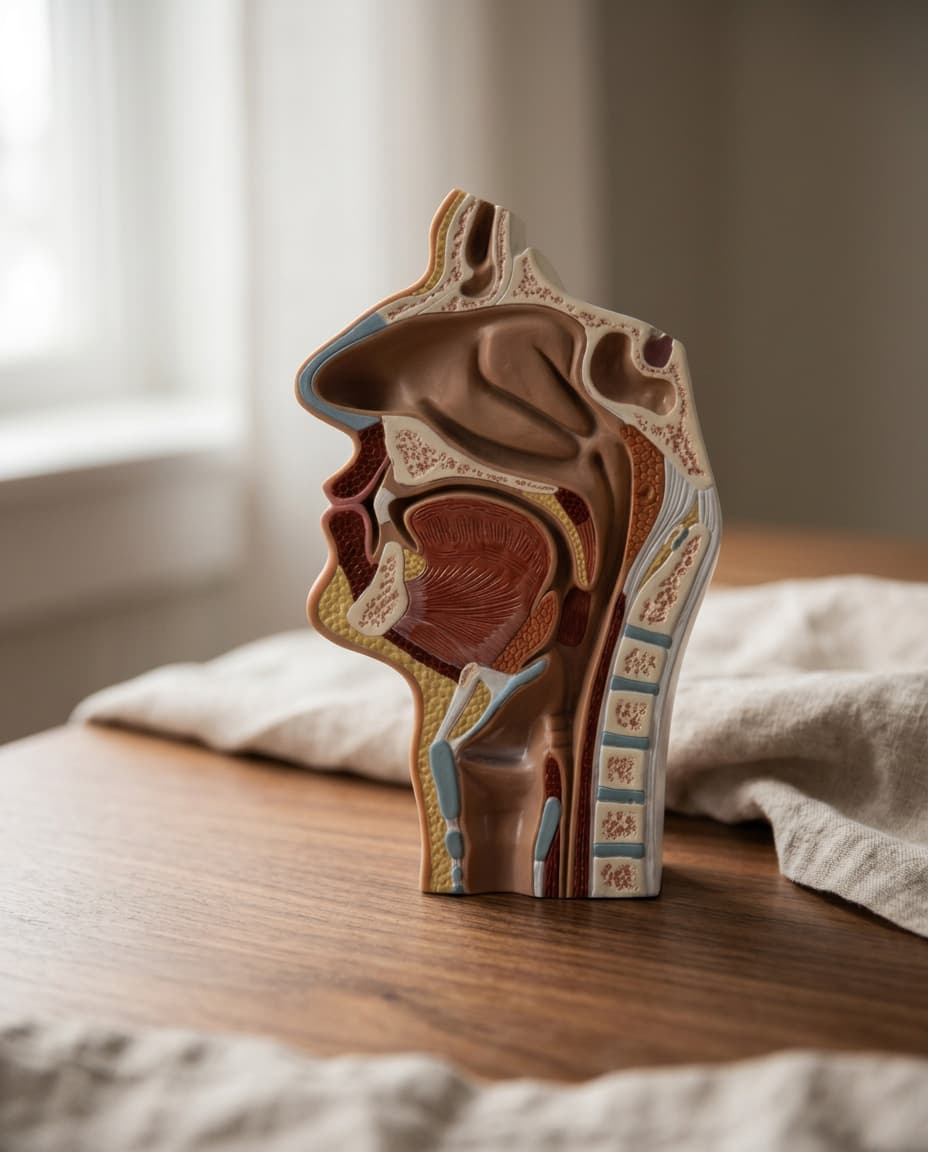
The skull's 22 bones meet at flexible articulations called sutures. Trauma, beginning at birth and compounding with every fall, concussion, dental procedure, and physical impact across a lifetime, drives a compressive force inward that jams these sutures. A jammed cranial vault restricts CSF pulsation and glymphatic drainage, and it compresses the sphenoid, the keystone bone that the surrounding cranial structures reference. That compression is the structural component underneath the symptom clusters you already treat.
The procedure
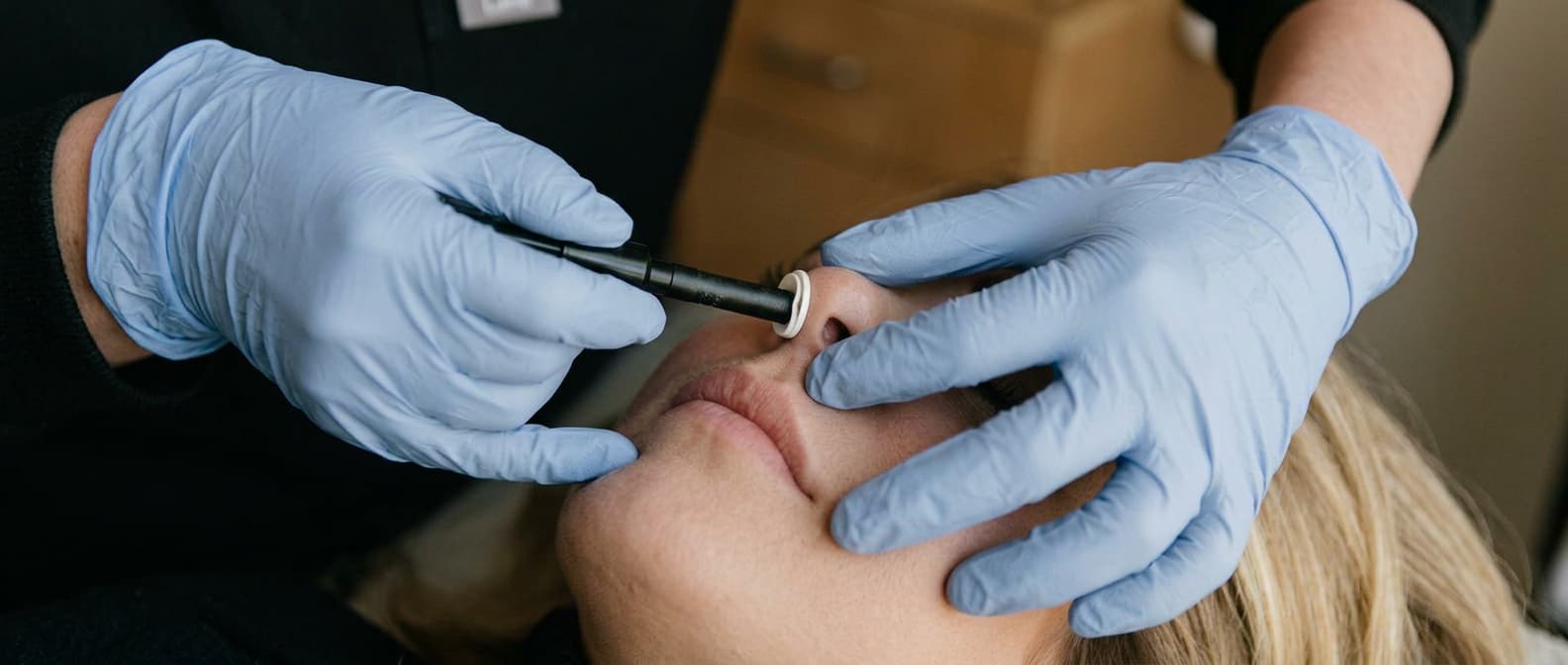
BNS uses a small latex balloon (a finger cot, tied securely to the valve of a sphygmomanometer bulb) inserted into the nasal passage and gently inflated. A full session consists of eight insufflations: one through each of the three nasal meatuses (inferior, middle, superior) on both sides, followed by a second pass through the inferior meatuses. Each inflation lasts seconds.
Why endonasal, not external
As the cot inflates, it passes through the choana, the posterior nasal aperture, creating a uniform outward expansive pressure from inside the cranial vault. That outward vector is what engages the sphenoid-palatine articulation, the pyramidal latch that functions as the locking mechanism of the vault. External manipulation can mobilize the surrounding bones, but it cannot reliably release this latch. This is the anatomical reason BNS reaches cases that cranial, craniosacral, and soft-tissue work leave unfinished, and it's why the technique has to be learned hands-on rather than from a video.
What happens in the room
Patients frequently report an audible crackling as sutures release, followed by changes in breathing and head pressure, clearer cognition, and reduced facial pressure before they leave the treatment room. The full insufflation sequence and force calibration, along with managing the range of patient responses, are the core of the weekend's supervised practice.
The patients you're thinking of right now.
The patient population for BNS is already on your schedule: the cases where your protocols produce improvement, then a plateau, because the remaining problem is architectural. These are the presentations with documented clinical response to BNS, listed in order of where the technique is hardest to replace.
01 Post-concussive symptoms
Disorientation, headaches, cognitive fatigue, and emotional dysregulation that persist weeks, months, or years after the acute event.
Concussive force compresses cranial sutures, and the nervous system operates under that mechanical load until the restriction is released. That is why these recoveries plateau. Of every presentation on this list, this is the one where BNS has no substitute in the integrative toolkit.
02 Brain fog & cognitive fatigue
Difficulty with concentration, word retrieval, and cognitive endurance that doesn't respond to nutritional or metabolic intervention.
The proposed mechanism is structural: compressed sutures impair CSF pulsation and glymphatic clearance. Patients frequently describe the change after treatment as a fog lifting, often within the first visit.
03 Sleep & airway dysfunction
Chronic mouth breathing, snoring, sleep-disordered breathing, and restless sleep that supplementation and soft-tissue work haven't resolved.
When the nasal airway is structurally narrowed, no behavioral or positional intervention fully fixes it. BNS expands the airway's structural dimensions directly.
04 Chronic sinus, ear & sensory conditions
Chronic sinusitis, recurring sinus and ear infections, year-round congestion, tinnitus, and pressure-related hearing complaints where restricted drainage pathways are the primary driver.
In Dr. Stober's documented clinical experience, sinus presentations were the most straightforward application of the technique. Consistent, and often fast.
05 Headache, TMJ & cranial tension patterns
Tension headaches, migraines, and TMJ tightness that trace to sphenoid compression carried through the connected cranial chain.
The nasal-specific technique has documented clinical use for migraine, TMJ dysfunction, and vertigo across the chiropractic and naturopathic literature.
06 Pediatric & birth-related presentations
Cranial compression from assisted delivery is common.
Roughly 13% of singleton births present with cranial deformation, and it compounds with every childhood impact. Pediatric screening, dosing, and parent communication are covered in the seminar's patient-selection module.
As with any clinical intervention, individual results vary. The seminar teaches indications and contraindications alongside intake screening, so you can apply the technique where it belongs and decline it where it doesn't.
Your first BNS candidates are already in your caseload.
The patient-selection module is built so you leave able to spot candidates in your existing caseload, and for most integrative practices they're already on the schedule. These are the presentations to watch for:
Partial response across multiple modalities, then plateau
Botanicals, homeopathy, elimination protocols, and anti-inflammatory diet all produce improvement, and none of them finishes the case. Partial response to every modality suggests a structural driver underneath a functional treatment plan.
A history of head trauma that got buried beneath the chief complaints
Concussions (including the “minor” ones), whiplash, a difficult birth, orthodontics, a fall from a horse in high school. Because cranial compression accumulates over a lifetime, old injuries the patient stopped mentioning years ago can still be driving today’s symptoms. The seminar covers the intake questions that bring that history back to the surface.
Chronic mouth breathing, observed or reported
Noted in the chair, mentioned by a spouse, or visible in the patient’s resting posture. Patients often normalized it so long ago they no longer report it, but it’s apparent the moment you know to look.
A resistant symptom cluster presenting together
Congestion, headaches, jaw tension, and restless sleep in the same patient, resistant as a group. Shared symptoms suggest a shared structural origin. One bone sits at the center of all of them.
A pending ENT or surgical referral
The patient facing a septoplasty or turbinate reduction recommendation who came to you specifically to avoid that path. Right now you have nothing else to offer. After this weekend, you do.
The seminar's patient-selection module makes this systematic. You'll learn who benefits most and how to screen for absolute and relative contraindications at intake. You'll also learn how to introduce the procedure in language patients trust. You leave with a written framework for identifying candidates.
See the full clinical indications in the BNS Clinical Analysis Brief →The technique works on the patients who can't describe their symptoms yet.
Cranial compression starts early. Roughly 13% of singleton births present with cranial deformation, and childhood adds its own record of falls, sports impacts, and orthodontics before a patient can articulate what changed. Dr. Stober built his practice on this population: he treated 30 to 50 patients per day across a 30-year career, most of them children. Dr. Grover has carried that pediatric application into her own practice, and it's part of the seminar curriculum. Her youngest patient was three days old.
What pediatric BNS addresses
In children, the presentations include chronic mouth breathing and snoring, recurring ear and sinus infections, hypertrophied adenoids and tonsils, congestion that makes every allergy season worse, feeding and latch difficulty in infants, birth-related cranial compression and flat spots, and narrow palates heading toward dental crowding. Dr. Saine's manual documents that children with recurrent ear infections “become free of these afflictions after just a few BNS treatments” in Dr. Stober's three decades of clinical experience.
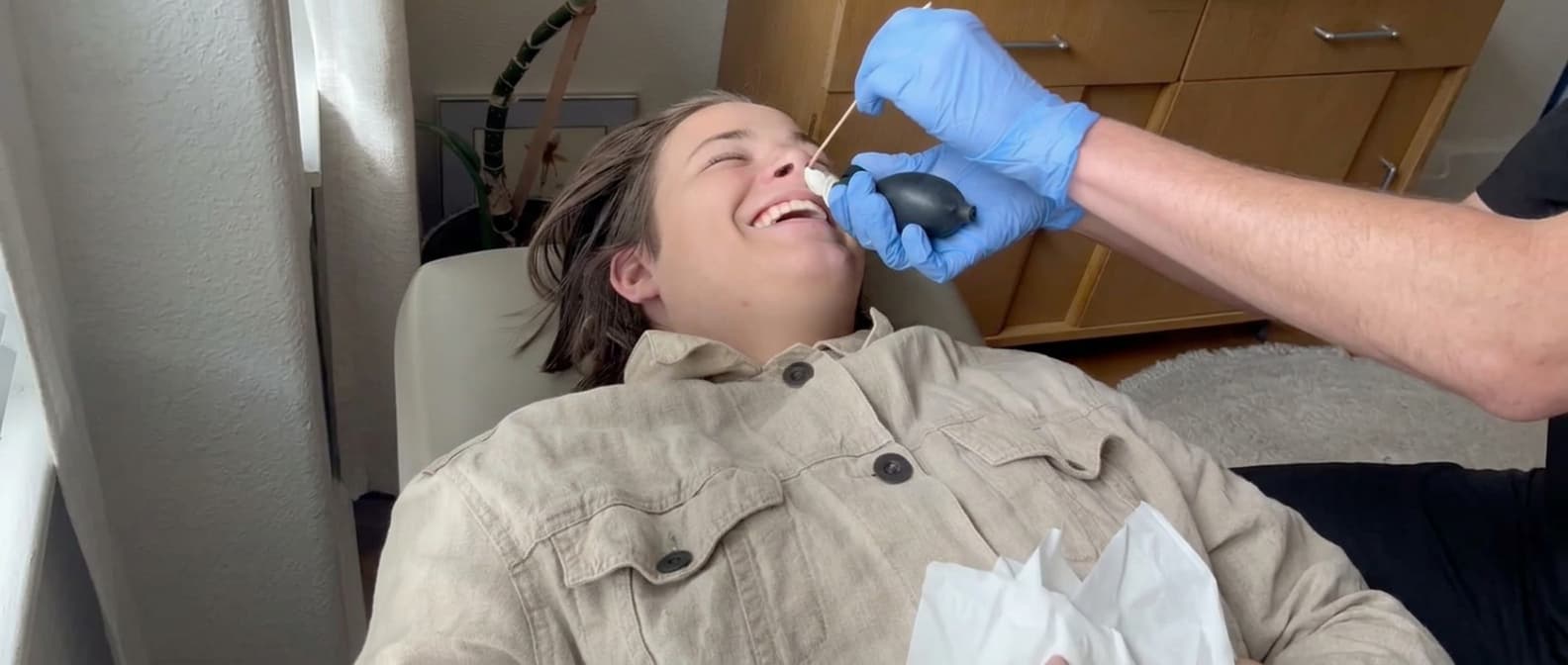
Cases from Dr. Grover's treatment room
Persistent mouth breathing following adenoidectomy
A five-year-old who had “been mouth breathing forever, and they took out his adenoids a year and a half ago trying to fix it, and it didn't stop.” He tolerated only one insufflation per side at his first visit, and the parent-documented before-and-after from that single pass showed visible improvement within a week. This is the pediatric version of the case every integrative practitioner knows: the surgical route was tried, and the structural driver was still there.
Infant feeding dysfunction, two months
A two-month-old evaluated for tongue tie who was breastfeeding only once a day, in the middle of the night “when he was dead asleep and could tolerate it.” One BNS treatment, and mom texted the next day: “he has preferred the breast over the bottle” and used the bottle once in the previous 24 hours. That change held before his tongue-tie revision ever happened.
Recurrent otitis media, age six
A parent in the treatment room, about her six-year-old: “she kept getting chronic ear infections... she hasn't had one since.”
Sleep-disordered breathing persisting post-adenoidectomy
A five-year-old, “a huge snorer... from infancy to probably three, he would wake up constantly,” three to four times a night, still mouth breathing when lying down after adenoid removal at age four. Pediatric candidates present with a history like this, and the parents have usually already tried the conventional ladder.
Read the evidence.
Before you register.
Download the BNS Clinical Analysis Brief — an overview of the mechanism, historical lineage, clinical indications, procedural approach, and safety protocols behind the technique you’ll be experiencing. A solid foundation before you arrive.
Dr. André Saine’s foundational manual — The Art, Principles, and Practice of Bilateral Nasal Specific: A Practitioner’s Manual — is also strongly recommended pre-reading. A link and pre-purchase option are included with your registration confirmation.
You won’t just observe.
You’ll receive it. You’ll perform it.
This seminar is built around direct, hands-on experience at every level. Dr. Grover and her colleague demonstrate and work with attendees simultaneously throughout the weekend — so each participant both receives the technique and performs it in the same session. You attempt the adjustment on your partner’s right side; your instructor demonstrates on the left immediately after, giving you and your partner live comparison feedback in real time. Partners then switch roles.
On Saturday morning, a live demonstration is performed on a real outside patient receiving BNS for the first time. Attendees observe the full case intake, the adjustment, and immediate post-treatment feedback in real time. The patient returns Sunday morning for a follow-up after one night.
Cranial anatomy & mechanism
Sphenoid mechanics, turbinate function, CSF drainage pathways, and why structural compression creates the symptoms you’re already treating.
Live demonstration & adjustment
Dr. Grover and her colleague perform BNS on attendees. Each participant receives the adjustment directly — not as a simulation, as a clinical treatment.
Supervised hands-on practice
Attendees work in supervised pairs simultaneously with instructors. You perform on one side; your instructor demonstrates on the other — live comparison from the patient in real time.
Patient selection
Who benefits most, how to identify structural candidates in an existing caseload, and how to explain the procedure in terms patients trust.
Contraindications & safety
Absolute and relative contraindications, intake screening, and how to manage the range of patient responses.
12.75 AANP CE Credits*
Full CE credit applied through the AANP accreditation process across the two-day classroom and hands-on format.
Leave with everything you need to start treating Monday.
Every attendee takes home a complete BNS kit, the same tools used in the supervised practicum, so you can begin offering the technique in your own practice.
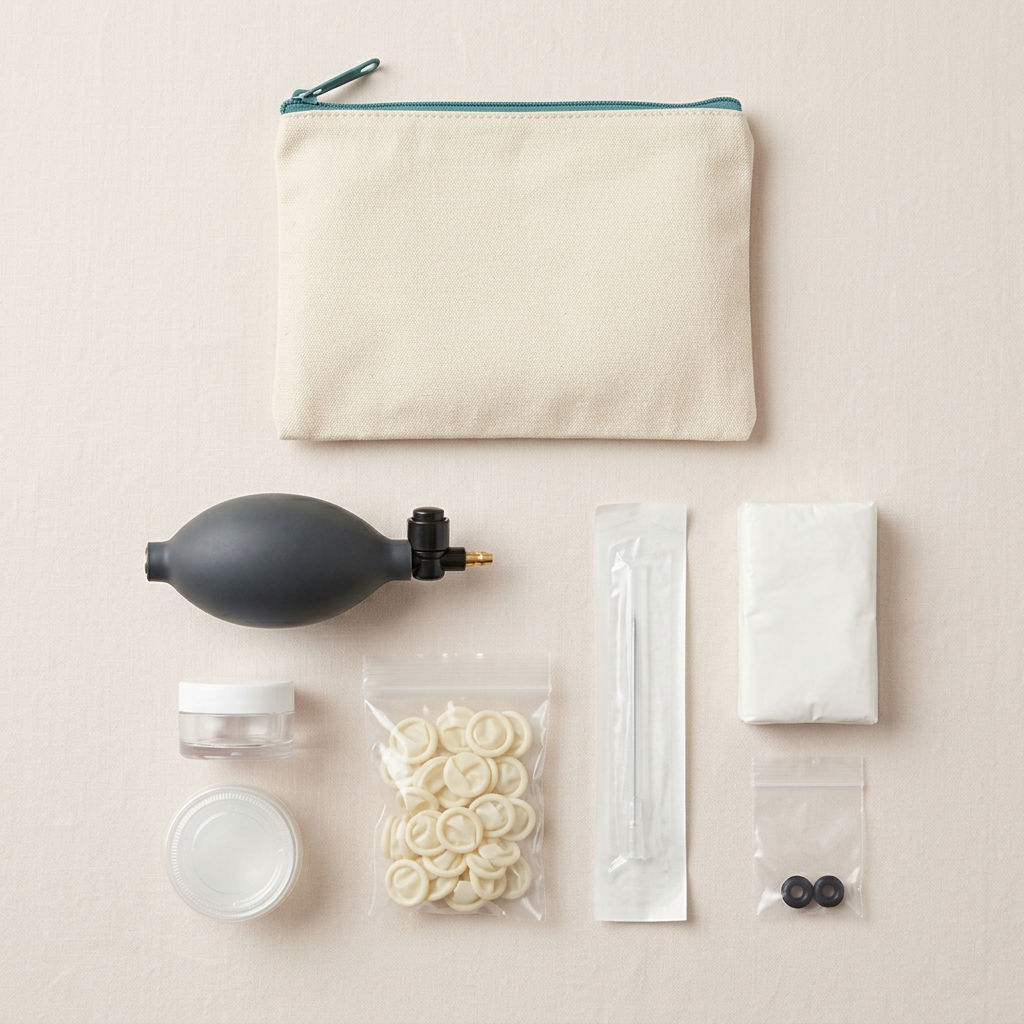
Large inflation bulb with push-button air release valve
Medical-grade lubricant
Finger cots (medium)
Single-wrapped medical-grade needle
Facial tissues
2 rubber grommets
Soft canvas travel bag
Built for licensed practitioners
already working root-cause
This seminar is designed for clinicians who are philosophically aligned with structural and integrative medicine and ready to experience a hands-on cranial technique firsthand. No prior BNS experience is required — only a solid clinical foundation and a curiosity about what structural medicine can reach that other modalities can’t.
* Advanced students nearing graduation — reach out to Dr. Grover directly for approval before registering.
Dr. André Saine
will be in the room.

Dr. Richard Stober developed and refined the Bilateral Nasal Specific technique over more than three decades of clinical practice. Dr. André Saine — one of the most respected figures in the naturopathic and homeopathic community — trained directly under Dr. Stober and has carried the technique forward with the same precision and clinical rigor Stober brought to it. Dr. Grover trained directly under Dr. Saine. The result is a short, unbroken chain of transmission from the technique’s originator to the practitioners in this room — with minimal drift and no loss of depth along the way.
Dr. Saine will join this seminar virtually for a live Q&A session, projected for the full cohort. He will be available to address questions that go beyond Dr. Grover’s own clinical experience and to speak directly to the history and mechanism of BNS from the practitioner who knows it best.
What patients notice
before they leave the office
These responses are drawn from post-treatment surveys completed by patients immediately after their first BNS adjustment.
“Before my adjustment I was just getting over a cold so my nose was still stuffy, but now breathing is more relaxed and easier. Also before treatment my head was hurting — but now that is gone.”
“Before the adjustment I felt some slight blockage, and afterward I felt completely clear.”
“Before the adjustment I felt like I could only get minimal air through one nostril, and afterward I was breathing deeper and more fully. I also noticed that my mind seemed a bit clearer. I was able to nose breathe more often rather than mouth breathe.”
“I knew I had sinus blockage but I had no idea how much and how quickly it could clear.”
“Even though my nose was running like crazy, I could actually breathe better through my nose — which is a huge start.”
“Before the adjustment my jaw crackled when I opened my mouth wide, and my right knee was level 7–8 painful every time I squatted. After the adjustment, BOTH my jaw crackling and knee pain are reduced by 90%. I keep expecting a crackle when I yawn — but it doesn’t happen.”
Two days.
Thoughtfully structured.
Saturday is the foundation day — cranial anatomy, a live BNS demonstration on a real outside patient, clinical rationale, technique individualization, and a live virtual Q&A with Dr. Saine. Sunday opens with that patient’s follow-up, then safety and screening, then both supervised practicum rotations, so every attendee receives and performs BNS the same day. The day closes with ethics, pain management, and practice integration.
Welcome, introductions, faculty financial disclosures
Grover
Cranial Anatomy and the Anatomical Basis of Bilateral Nasal Specific
Grover
Break
—
Live Patient Demonstration: Intake, Screening, Treatment, and Immediate Reassessment
Grover
Debrief and open discussion
Grover
Lunch
—
Clinical Rationale: Structural Contribution to Airway, Post-Concussive, Headache, and Temporomandibular Presentations
Grover
Break
—
Individualization of the BNS Technique: Balloon Configuration, In-Treatment Troubleshooting, and the Patient Experience
Grover
Live virtual question and answer session
Saine
Overflow question and answer, or open faculty discussion
Saine; Grover, Rangelova
Patient Follow-Up: Case Presentation of Early Post-Treatment Course
Grover
Contraindications, Intake Screening, and Procedural Safety
Grover
Supervised Practicum, Rotation One: Group A Performing (includes group assignment and briefing)
Grover, Rangelova
Lunch
—
Role reversal briefing; readiness check
Grover, Rangelova
Supervised Practicum, Rotation Two: Group B Performing
Grover, Rangelova
Break
—
Ethics: Informed consent under evidentiary uncertainty
Grover
Ethics: Consent and assent in patients who cannot fully participate
Grover
Ethics: Managing hope, scope, and referral obligations
Grover
Pain: Assessment in the structural patient; red flags
Grover
Pain: Temporomandibular and facial pain
Grover
Pain: Persistent post-traumatic headache
Grover
Pain: Procedure-related pain and anticipatory guidance
Grover
Integrating Bilateral Nasal Specific into Clinical Practice
Grover
CE portion concludes. Closing remarks and certificates
Grover
Note on supervised practicum timing. Within each practicum rotation, each treatment pair completes a pre-treatment examination (approximately 10 minutes, unsupervised), the supervised insufflation sequence (approximately 20 minutes, direct instructor supervision required), and a post-treatment examination (approximately 10 minutes, unsupervised). Pairs start on a staggered schedule so that two supervised treatment tables run continuously. Both rotations take place on the same day, so every attendee receives and performs the technique with lunch between. No insufflation is performed by any attendee outside direct instructor supervision at any point in this activity.
The Pioneer Collective
Cascade Room · Tacoma, WA
Hosted in the Cascade Room at The Pioneer Collective — a beautifully designed coworking and event space in the heart of downtown Tacoma. Natural light, warm materials, and a PNW wellness energy that fits the weekend perfectly. The room holds up to 20; this cohort keeps it at 16.
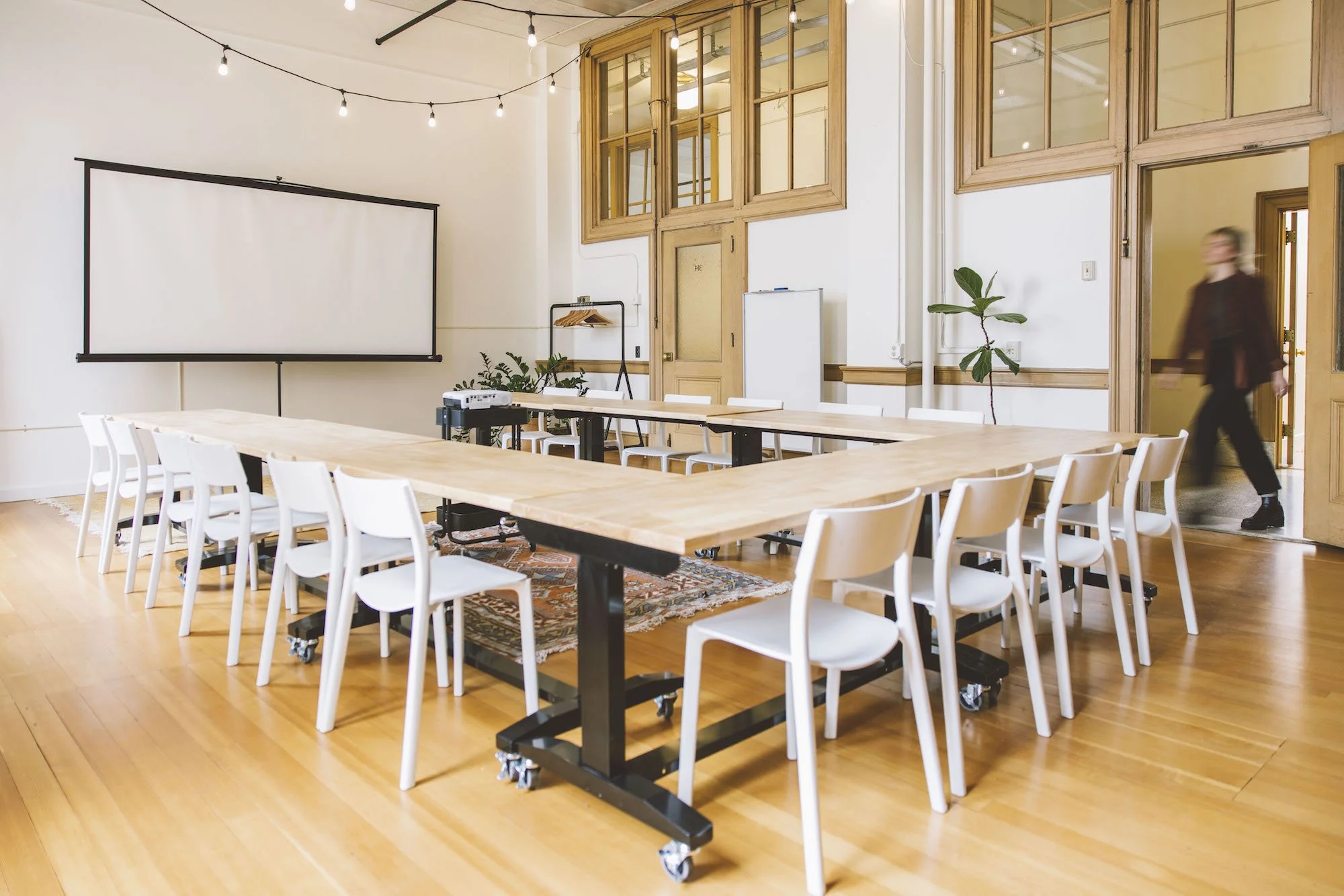


Max capacity: 20
Our cohort: 16 practitioners
Saturday lunch included
Snacks throughout
Plan your trip.
We’ve done the legwork.
Tacoma sits on the I-5 corridor between Portland and Seattle — easy to reach from anywhere in the Pacific Northwest, and a straightforward flight from most of the West Coast.
Flying In
Seattle-Tacoma International (SEA) — Primary
~30 min south by rideshare. Best option for practitioners flying from outside the Pacific Northwest. Sounder Train also connects SEA to Tacoma’s Union Station.
Portland International (PDX)
~2 hour drive north on I-5. Good option for practitioners from Oregon and SW Washington. Amtrak Cascades also runs Portland → Tacoma directly — 4 blocks from the venue.
Amtrak Cascades
Direct service from Portland, Seattle, and Vancouver BC. Tacoma Union Station is 4 blocks from The Pioneer Collective. A stress-free travel option.
Where to Stay
Hotel Murano ★★★★
1320 Broadway · 5 min walk. Tacoma’s most distinctive boutique property — glass art throughout. 4.3 stars · 2,000+ reviews.
Courtyard by Marriott Tacoma Downtown
1515 Commerce St · 6 min walk. Reliable and well-located. 4.2 stars · 1,300+ reviews.
Hilton Garden Inn Tacoma Downtown
2102 S C St · 10 min walk. Full-service with on-site dining. 4.2 stars · 1,278+ reviews.
Ebony & Ivory Coffee
1145 Broadway · 4 min walk. Coffee flights, beautiful space, Mount Rainier views on clear days.
Third Space Cafe
921 Pacific Ave · 6 min walk. Housemade biscuit sandwiches and natural-ingredient lattes.
Chez Lafayette Creole
1101 Tacoma Ave S · 2 min walk. Candlelit New Orleans-inspired. Perfect Saturday evening dinner spot.
Manuscript
203 Tacoma Ave S · 8 min walk. Italian-inspired scratch kitchen, weekend brunch with vinyl DJs.
Museum of Glass
10 min walk. World-class glass art on the waterfront. Worth a visit Saturday evening or Sunday afternoon.
Ruston Way Waterfront
10 min drive. Scenic walk along Commencement Bay with Mount Rainier views. A perfect Sunday reset.
The weekend at a glance
Sat–Sun
Battle Ground, WA 98604
AANP accredited
Intentionally small
Saturday lunch · Snacks
Reserve Your Seat
October 24–25 · Battle Ground, WA. $2,000, paid in full. Registration closes Friday, October 16.
16 seats.
Registration is non-refundable; event insurance recommended.
Travel and accommodation not included.
CE credits pending AANP approval.
BNS is a specialized structural technique — and in most integrative markets, it commands a fee that reflects that. Practitioners in the Portland area typically charge between $300 and $1,000 per treatment depending on their positioning and market.
The seminar pays for itself quickly — but what you're really taking home is a clinical skill that separates your practice and finally gives patients who've exhausted every other option a practitioner who can reach the structural root of their problem.
Questions about whether this seminar is right for your practice or credential type? Reach out to [email protected]
* CE credits pending AANP approval.